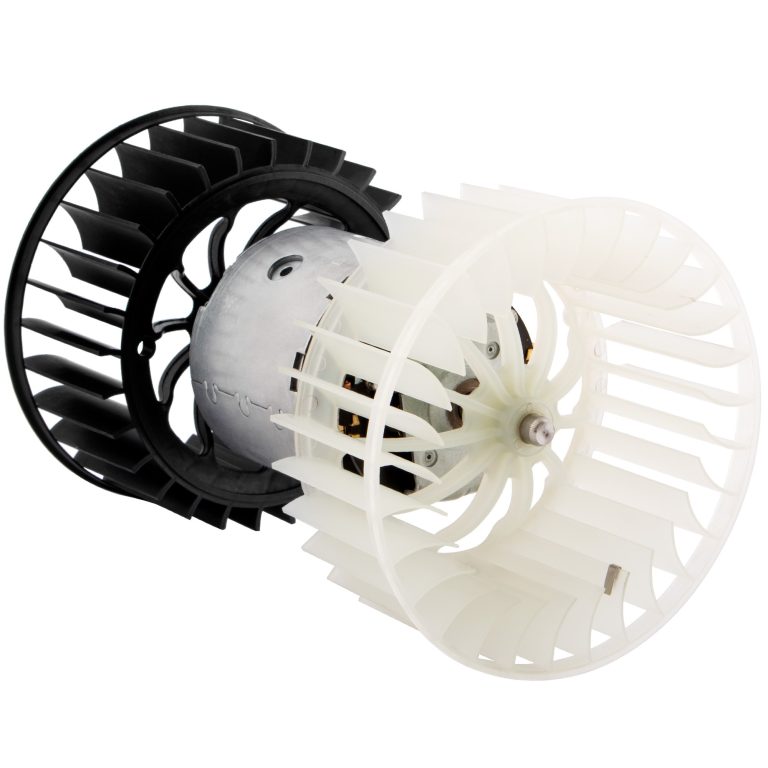
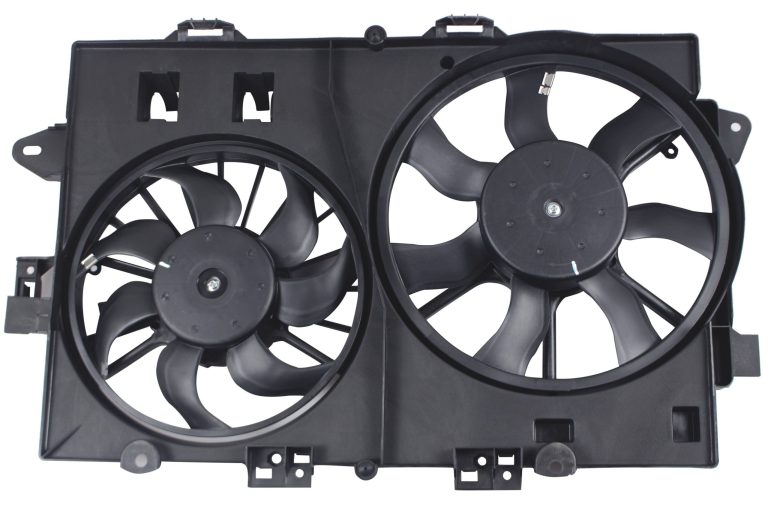
Radiator Fan Won’t Shut Off? Normal After-Run or a Bad Part
You park, switch off, and the radiator fan keeps roaring. On many cars that’s normal: the engine is hot, and the fan shuts itself off a few minutes later. But if the radiator fan won’t shut off at all, runs on a cold engine, or stops only when you pull its fuse, a part has failed. The usual culprits are a relay stuck closed, a failed fan control module, a false hot reading from the coolant temperature sensor, a wiring short, or low coolant. If your fan has the opposite problem and never comes on, start with overheating in traffic but fine on the highway.
Quick answer
- If the fan runs for a while after a hot drive, then stops by itself and the battery is fine, that’s normal after-run.
- If it runs on a cold engine, never stops, or drains the battery overnight, treat it as a fault.
- The common causes are a relay stuck closed, a failed fan control module, a coolant temperature sensor or wiring fault that reads hot, a shorted wire, and low coolant that makes the engine run hot for real.
- Test in this order: coolant level on a cold engine, live coolant temperature on a scan tool, a relay swap, then unplug tests to find the part that keeps the fan on.
- Replace just the control module if it is a separate part and the fan motor spins freely. If the module is built into the fan or the motor is worn, replace the fan assembly.
When after-run is normal
When you shut off a hot engine, the coolant stops moving and heat from the block soaks up into the top of the engine and the engine bay. Many cars are programmed to run the radiator fan for a while after shutdown to clear that heat. Turbocharged engines and cramped engine bays often get this treatment, and many European cars do it routinely. Sometimes the fan only starts after you have locked the car and walked away.
The A/C also keeps the fan busy. With the engine running, most cars turn the fan on whenever the compressor runs, since the condenser in front of the radiator needs airflow. So a fan that runs nonstop with the A/C on can be normal on an engine that isn’t hot. Some systems also watch refrigerant pressure, which means more fan time on a hot day with the A/C working hard.
After-run is probably normal if:
- the engine was fully warm from a highway drive, a hot day, towing, or a long idle with the A/C on
- the fan stops by itself after several minutes
- it doesn’t happen after a short trip on a cool day
- the battery still starts the car the next morning
Your owner’s manual or service information may describe after-run for your model, and some say how long it can last.
Signs the fan is stuck on
- The fan runs on a cold engine, for example first thing in the morning before you’ve started the car.
- It keeps going long after shutdown and stops only when you pull its fuse or relay.
- The battery is dead after the car sits overnight or for a day or two.
- It runs at full speed the whole time you drive, with the A/C off and the engine at normal temperature.
- The temperature gauge reads hot, cold, or jumps around while the engine seems fine.
- The check engine light is on with a coolant temperature sensor code or a fan control circuit code.
Why a radiator fan won’t shut off
Relay stuck closed
The fan relay is a switch that carries the fan’s high current. Years of arcing can weld its contacts together, and then the fan gets power whether anything asked for it or not. If the relay’s power feed stays live with the key off, as it does on some cars, the fan will keep running in the driveway. This one is easy to confirm, because pulling the relay stops the fan right away.
Failed fan control module
Many newer cars use a fan control module instead of relays, or alongside them. It takes a speed command from the engine computer and runs the fan at variable speed. If its output shorts, it can run the fan at full speed with no command at all. Some modules are also designed to go to full speed as a failsafe when they lose the command signal, so a broken signal wire can look like a bad module. The module may be a separate unit on the fan shroud or near the radiator, or it may be built into the fan motor and not sold on its own.
False hot reading from the coolant temperature sensor
The engine computer turns the fan on based on the coolant temperature sensor (ECT). When the sensor or its wiring reports a hot engine, the computer runs the fan to cool an engine that is already cool. A sensor circuit that drops out completely can also put the computer into a failsafe mode that runs the fan constantly. Some engines have more than one coolant temperature sensor, say one for the computer and another for the gauge or a separate fan switch. On those engines a normal-looking gauge doesn’t prove the computer is seeing the right number.
Wiring short
A wire that rubs through near the radiator support or fan shroud can short the control circuit and switch the fan on, and water in a connector can do the same. Check the fan, the module, the relay socket, and the sensor connector for chafed insulation, melted plastic, or green corrosion.
Low coolant or a real overheat
Sometimes the fan is right to run. Low coolant can leave the temperature sensor in steam or an air pocket, where it reads hot or erratic, and an engine that really is overheating will keep the fan going after shutdown. A stuck thermostat, a leaking housing, or air left in the system after coolant work can all cause it. Our thermostat housing failure post covers finding the leak and burping the system.
A fan that won’t stop can drain the battery
A radiator fan is one of the bigger electrical loads on a car, and left running with the engine off it can flatten a battery overnight. If the radiator fan won’t shut off and you have to leave the car, pull the fan fuse or relay (the fuse box lid usually labels them) or disconnect the negative battery cable. That stops the drain, but it also leaves the engine with no fan airflow at idle. Put the fuse or relay back before you drive, or watch the temperature gauge closely and stay out of stop-and-go traffic.
Deep discharges can weaken a battery, so if yours has gone flat more than once, test it after the repair. The battery and charging checks are in our car clicks but won’t start post.
Safety before you test
- Work on a cool engine, and don’t open the radiator cap or coolant reservoir while it’s hot.
- Electric fans can start with the key off. Unplug the fan connector or disconnect the negative battery cable before your hands go near the blades.
- When a test needs the fan powered, keep hands, sleeves, hair, and tools clear of the blades.
- Run the engine outdoors or with the garage door open.
- If the vehicle also has a belt-driven fan, never reach near it with the engine running.
How to find what keeps the fan on
- Check the coolant level with the engine cold. It should sit between the marks on the reservoir. If it’s low, top it up with the coolant your manual specifies and find the leak before you suspect anything electrical.
- If your scan tool shows live data, read coolant temperature. After the car has sat overnight, the reading should be close to the outside air temperature. A cold engine that reads hot, or a reading that jumps around, points to the sensor, its connector, or its wiring. Pull any stored codes while you’re connected.
- See what the fan does with the key off and the engine cold. Most cars have no reason to ask for the fan on a cold engine, so if it’s running now, something on the power side is usually stuck on: the relay, the module, or a shorted wire.
- Swap the fan relay with an identical one from a non-critical circuit (the fuse box lid shows which ones match). If the fan now stops and works normally, replace the relay. If it keeps running even with its relay pulled, it is getting power through a module or another circuit, or a wire is shorted.
- On cars with a separate fan control module, check your service information first, because some modules go to full speed when they lose their signal and that changes how you read this test. Then, with the key off, unplug the module’s small signal connector. The fan may be running while you do this, so reach the connector from the side and keep your hands clear of the blades. If the fan keeps running, the module is driving it with no command, which points to the module or a short in its output wiring. If the fan stops, the module was following a command, so look upstream at the temperature reading, the A/C request, and the wiring from the engine computer.
- Inspect the harness at the fan, the module, the relay socket, and the coolant temperature sensor. If a connector has melted or turned brown, replace the pigtail along with the part.
- With the fan unplugged, spin it by hand. A motor that grinds, drags, or has play in the shaft is worn. A dragging motor pulls extra current and can overheat a control module, so sort out the motor before you fit a new module.
Replace the fan assembly or the control module?
Let the test results and the layout of your car decide. On fan assembly listings, the spec table shows whether a control module is included.
- If the relay swap fixed it, the relay is the only part you need.
- A wrong reading on a cold engine, or stored sensor codes, calls for a new coolant temperature sensor, plus its connector if that is damaged.
- When the module is a separate part, the unplug test points to it, and the fan motor spins freely with no grinding or drag, replace just the module.
- Replace the fan assembly when the module is built into the fan, the motor is noisy or drags, the blades or shroud are damaged, or the fan connector has melted.
- On cars where the fan and module are separate parts, a dragging motor plus a failed module means replacing both.
A fan assembly listed without a control module needs your old module moved over or a new one bought separately. A new fan won’t fix a module that is stuck on.
How to pick on Tetron
Before you buy anything, enter your VIN in NHTSA’s recall lookup to see whether the car has an open recall, and ask a dealer whether a technical service bulletin (TSB) covers the cooling fan or its module.
- Start with year, make, model, and engine. For some models the module listings also name the original fan brand (Siemens or Brose).
- Match the part number on your old module, fan, or sensor to the listing.
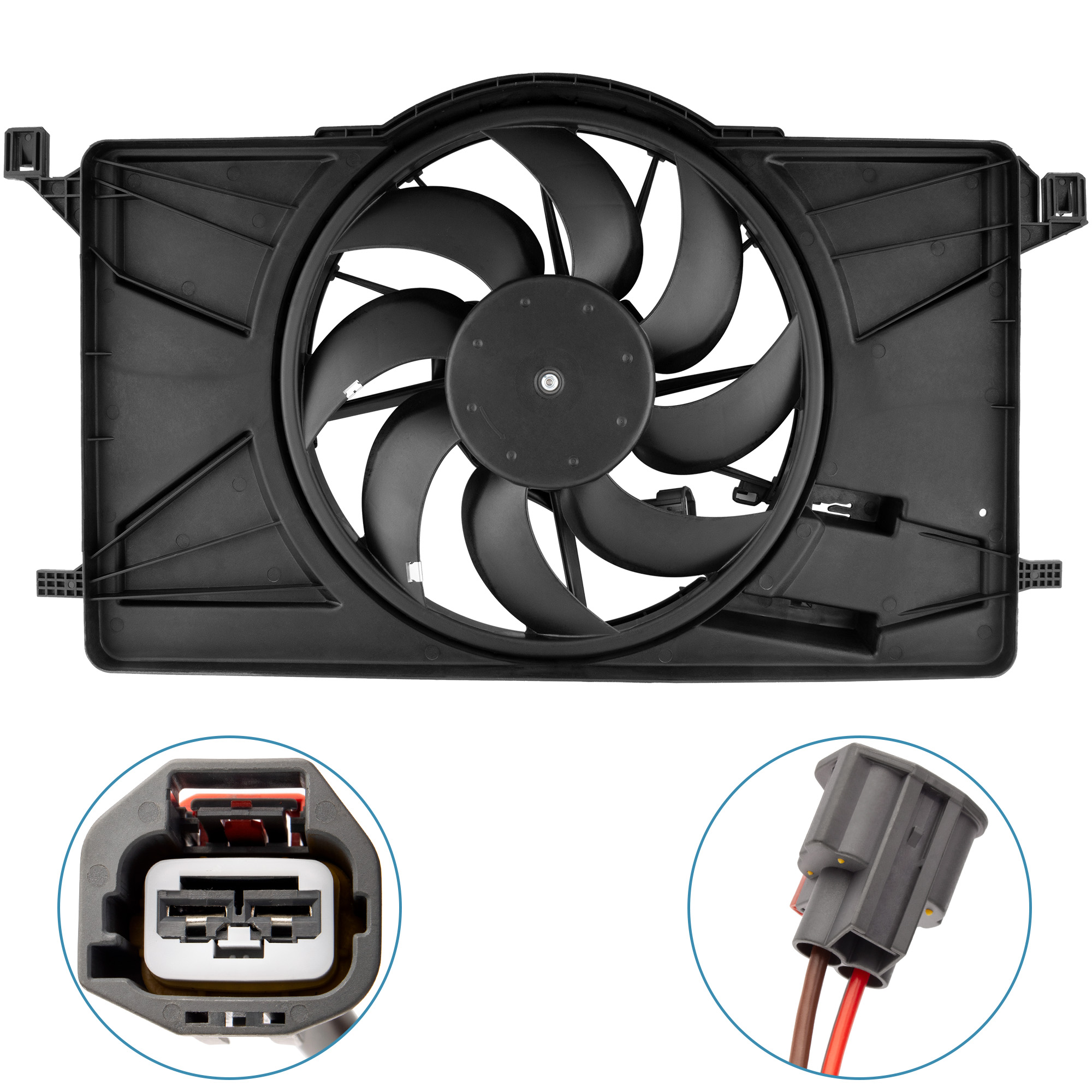
- On fan assemblies, check the Control Module Included line in the spec table.
- Verify fitment before checkout.
Stock changes, so confirm it on the listing, and check each part below against your year, engine, and OE number before you order.
VW and Audi with a separate fan control module
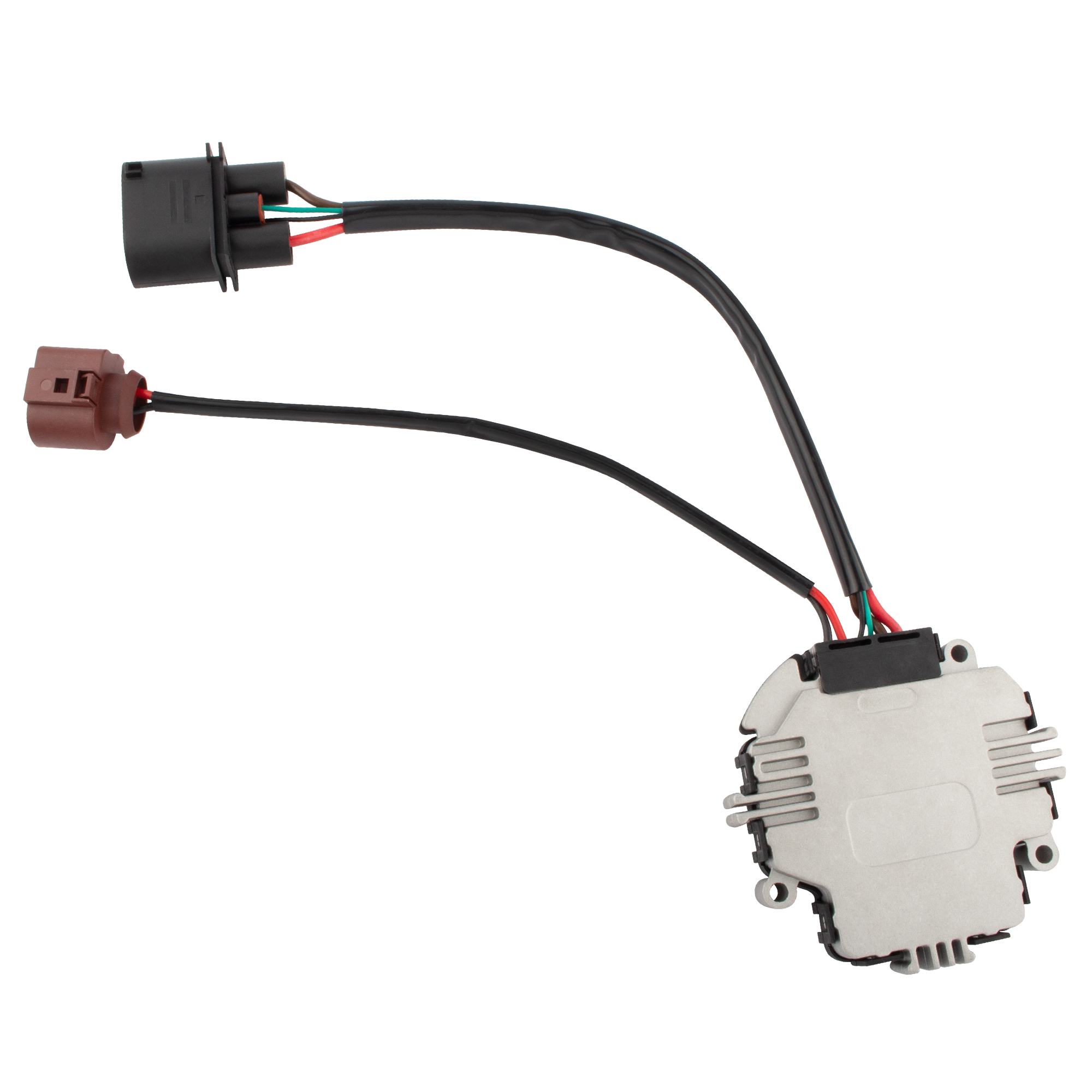
- Radiator cooling fan control module, Audi A3/TT and VW CC, Eos, GTI, Golf, Jetta, Passat, Rabbit, Tiguan (1K0959455 / 1TD959455): SKU BX08700001-1. Fitment depends on year and engine, and on some Golf, Eos, and R32 models also on the original fan brand (Siemens or Brose). The Jetta years have gaps, and the Package Included line lists the module only. Match the number on your old module and verify fitment.
- Right (passenger) side radiator cooling fan, Audi A3/S3 and VW Beetle, Golf, Jetta, Passat, Rabbit (1K0959455DG / ES / CT / R): SKU BX00400054-1. This is a single right-side fan, and the spec table says the control module is not included. It suits a car whose fan motor is noisy, seized, or has a melted connector. Verify year, engine, and side before ordering.
Fan assembly with the control module included
- Radiator cooling fan, Mercedes-Benz GL, ML, and R-Class (1645000093): SKU BX00400043-1. It covers the GL320, GL350, GL450, GL500, GL550, ML320, ML350, ML550, and R320 (W164, X164, W251) in the years listed, and the spec table lists the control module as included. Check the years for your model and compare part numbers before ordering.
Fan assembly without the control module
- Radiator cooling fan assembly without control module, Ford Focus 2012-2018 (BV6Z-8C607-K): SKU BX00400057-1. The title says the module is not included, so plan to reuse your old one if it tests good. The listing covers the 2.0L, the 2.3L turbo (2016-2018), and the 1.0L turbo (2018). Verify engine and fitment.
Coolant temperature sensor
- Engine coolant temperature sensor, GM 3.8L (FLS-24 / 10096163): SKU BX09300001-1. It fits the Buick Century and Regal, Chevy Impala, Lumina, Monte Carlo, Camaro, and Venture, Pontiac Grand Prix, Bonneville, and Firebird, and Oldsmobile models in the listed years. On some models the vehicle table runs a few years past the written list, so confirm your year and engine and match the old sensor’s part number.
Browse by vehicle: Cooling Fan Module, Cooling Fan Assembly, and Coolant Temperature Sensor.
FAQ
Is it normal for the radiator fan to run after the engine is off?
On many cars, yes. After a hot drive the fan can run for several minutes to clear heat soak and then stop by itself.
How long should the radiator fan run after shutdown?
It varies by vehicle, so check your owner’s manual or service information. A fan that runs until the battery dies is not normal.
Why is my radiator fan running when the engine is cold?
Usually a relay stuck closed, a failed fan control module, a coolant temperature sensor or wiring fault that reports a hot engine, or a shorted wire.
Can a bad coolant temperature sensor make the fan run all the time?
It can. A false hot reading, or a dead sensor circuit that puts the computer in failsafe mode, can keep the fan on.
Can a radiator fan that won’t shut off drain the battery?
Yes, sometimes overnight. Until it’s fixed, pull the fan fuse or relay or disconnect the battery when you park, and reconnect before you drive.
How do I know if the fan relay is bad?
Swap it with an identical relay from the fuse box. If the problem goes away, the old relay was bad.
Should I replace the fan control module or the whole fan assembly?
The module, when it is a separate part and the fan motor spins freely. The fan assembly, when the module is built into the fan or the motor is worn.
Can I drive with the fan fuse pulled?
Only for short trips with no idling or traffic, while you watch the temperature gauge. Put it back and fix the fault as soon as you can.
Parts and related guides
Once you’ve found why the radiator fan won’t shut off, parts for the module, the fan, and the sensor are in Cooling Fan Module, Cooling Fan Assembly, and Coolant Temperature Sensor; check fitment on each listing before you order. If the fan never comes on at all, see overheating in traffic but fine on the highway. If your truck has a belt-driven fan that roars all the time, test the fan clutch instead. Our guide to bad fan clutch symptoms covers the engine-off spin tests.